

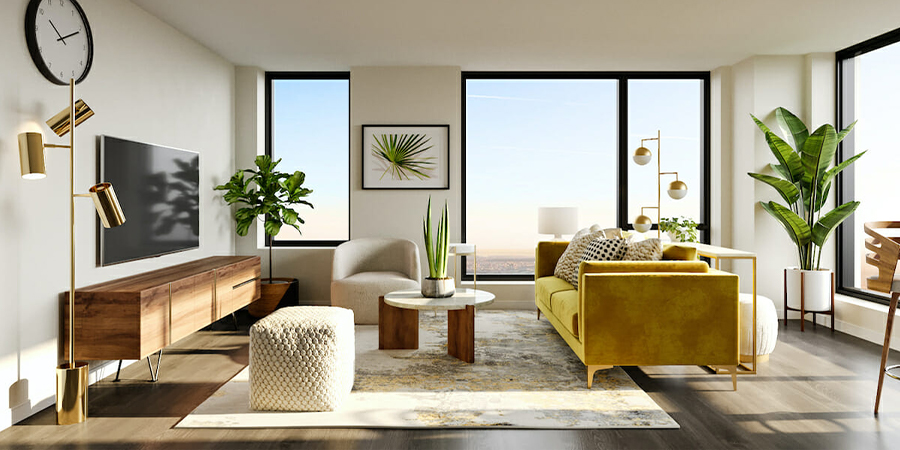
Today’s most captivating interiors aren’t defined by color palettes or furniture choices—they’re defined by how they feel. The best designers understand that beauty alone doesn’t create lasting impact; emotion does. Enter the world of atmospheric layering—a refined décor strategy that goes beyond surface styling to shape mood, perception, and sensory experience through the invisible interplay of light, texture, sound, scent, and spatial rhythm.
Atmospheric layering isn’t about adding more objects; it’s about orchestrating multiple sensory dimensions into one cohesive, immersive environment. It’s a sophisticated approach for those who have already mastered the basics and want to push their interiors into the realm of emotional design and experiential storytelling.
What Is Atmospheric Layering?
At its core, atmospheric layering is the process of curating sensory depth in a space through a blend of tangible and intangible elements. It’s the architecture of feeling—the design of ambiance as much as aesthetics. This approach recognizes that humans experience interiors not just visually, but sensorially and emotionally.
In other words, it’s not enough for a living room to look inviting—it must also sound soft, smell warm, and feel balanced. The art lies in achieving harmony across all layers so that the environment engages people subconsciously, making them feel at ease without knowing exactly why.
1. The Foundation: Emotional Intent and Spatial Mood
Before styling begins, define the emotional tone you want the room to evoke—tranquility, focus, nostalgia, or vitality. Every décor choice should reinforce that intent.
Advanced strategy:
-
Start with mood mapping. Assign emotional roles to zones: an energizing breakfast nook, a grounding entryway, a reflective corner.
-
Choose visual anchors that communicate that emotion—a tactile linen wall finish for serenity or a metallic sculpture for energy.
-
Treat furniture arrangement as choreography: movement and sightlines must flow with the desired emotional tempo, not against it.
When emotional intent drives design, décor becomes purposeful storytelling rather than aesthetic coincidence.
2. The Layer of Light: Sculpting the Invisible
Light is the most powerful yet underestimated design material. In atmospheric layering, lighting is sculptural—it defines volume, texture, and emotional pace.
Key techniques:
-
Temperature zoning: Use warmer tones (2700K–3000K) for intimacy and cooler tones (4000K–5000K) for alertness and focus.
-
Dynamic lighting design: Integrate dimmers or smart systems that shift light intensity throughout the day to support circadian rhythms.
-
Textural interplay: Highlight material contrasts by grazing light across rough stone or soft fabrics to accentuate tactile richness.
-
Indirect lighting: Hide sources to let illumination feel organic—emanating from behind furniture or architectural recesses.
Light layering isn’t about brightness—it’s about rhythm, subtlety, and emotional punctuation.
3. Texture as a Sensory Script
Texture controls how a space feels to the touch and the mind. It anchors visual weight, affects temperature perception, and shapes how light behaves.
Advanced textural layering principles:
-
Combine high-contrast finishes—like matte clay with glossy ceramic—to stimulate depth and curiosity.
-
Use temperature textures strategically: stone cools, wood warms, velvet comforts.
-
Incorporate acoustic textiles such as wool drapery or cork panels to shape the soundscape and reduce echo.
-
Layer tactile memories—vintage leather, reclaimed wood, or woven linen—to embed emotional resonance.
Think of texture as the emotional vocabulary of your interior. Each surface tells a story; together, they form the room’s narrative tone.
4. The Sound Dimension: Designing the Sonic Atmosphere
Sound often escapes visual design thinking, but it profoundly affects mood. The way noise moves—or doesn’t—within a room defines its psychological silence.
Professional-level techniques:
-
Diffuse rather than absorb: Instead of killing sound, scatter it using angled surfaces or patterned panels for a balanced acoustic field.
-
Integrate natural resonance: Materials like bamboo, plaster, and wool create subtle organic reverb that feels alive.
-
Create zones of quiet and liveliness: A calm reading space benefits from dense drapery, while a kitchen thrives on lively acoustics.
-
Blend technology invisibly: Hide speakers within ceilings or furniture to deliver immersive yet unobtrusive background audio.
Sound, when mastered, transforms décor into a multisensory experience rather than a static picture.
5. The Olfactory Layer: Designing with Scent Memory
Our brains associate scent with emotion faster than sight or sound. An advanced designer curates olfactory cues that define the identity of each space.
High-level scent strategy:
-
Choose layered notes aligned with the room’s function—woody for grounding, citrus for energy, amber for warmth.
-
Use non-obvious diffusion methods: porcelain stones, essential-oil wall diffusers, or integrated HVAC scenting systems.
-
Rotate seasonally: Shift from pine and smoke in winter to fig and bergamot in summer to maintain sensory novelty.
-
Blend scent subtly; it should feel discovered, not imposed.
A home that smells intelligent feels instantly more alive and emotionally aware.
6. Rhythm and Spatial Tempo
Every environment carries a rhythm—how fast or slow it feels. This tempo is shaped by furniture spacing, visual density, and pathway flow.
Advanced rhythm control:
-
Maintain visual pauses—moments of openness between focal elements to let the mind rest.
-
Balance symmetry and interruption; perfect symmetry can feel static, while small asymmetries keep energy fluid.
-
Use directional materials (like patterned rugs or linear wood grains) to guide subtle movement through the room.
-
Think musically: repetition creates harmony, variation adds interest, silence brings depth.
When rhythm is orchestrated intentionally, your décor transcends static design—it becomes an experience people can feel moving around them.
7. The Human Element: Adaptive Comfort
No matter how beautiful a space is, it must respond to its occupants. Advanced interiors are emotionally intelligent—they adapt to human behavior, not the other way around.
Strategies for adaptive comfort:
-
Use modular furnishings that evolve with lifestyle changes while maintaining spatial balance.
-
Incorporate biophilic cues—plants, natural textures, and organic shapes—to ground occupants psychologically.
-
Integrate smart environmental systems that modulate lighting, temperature, and sound automatically based on occupancy.
-
Design with intuitive ergonomics, ensuring each zone feels natural in both posture and purpose.
The future of décor lies in empathy—the ability of a space to anticipate needs and nurture emotion.
Bringing It All Together
Atmospheric layering is where design meets psychology. It transforms rooms into resonant experiences that speak through light, air, touch, and scent. The result isn’t just a beautiful home but one that feels alive, personal, and timeless.
Rather than asking “What style should I use?” the designer of the future asks, “What emotional atmosphere should this space create?” Master that, and you move from decorating spaces to composing environments.
FAQs
1. Is atmospheric layering the same as multisensory design?
Not exactly. While both engage multiple senses, atmospheric layering focuses on emotional harmony—how those senses interact to create an overall feeling rather than stimulating them individually.
2. Can this technique be applied to commercial spaces?
Yes. Boutique hotels, galleries, and restaurants increasingly use atmospheric layering to build brand identity through emotional immersion.
3. How can homeowners experiment with it affordably?
Start with lighting and scent—the two easiest yet most impactful atmospheric layers to adjust without renovation.
4. What’s the biggest mistake people make in layering ambiance?
Overcomplicating. Layering is not about adding more; it’s about controlling perception with subtlety and rhythm.
5. How does atmospheric layering differ from traditional interior styling?
Traditional styling prioritizes visuals, while atmospheric layering integrates invisible emotional cues—sound, scent, temperature, and spatial rhythm.
6. Can it complement maximalist décor?
Absolutely. Maximalism thrives on density, but atmospheric layering ensures it remains balanced, cohesive, and emotionally navigable.
7. What emotional goal should guide a home’s overall atmosphere?
Authenticity. The most powerful atmosphere is one that mirrors your inner rhythm—not a trend or external ideal.
